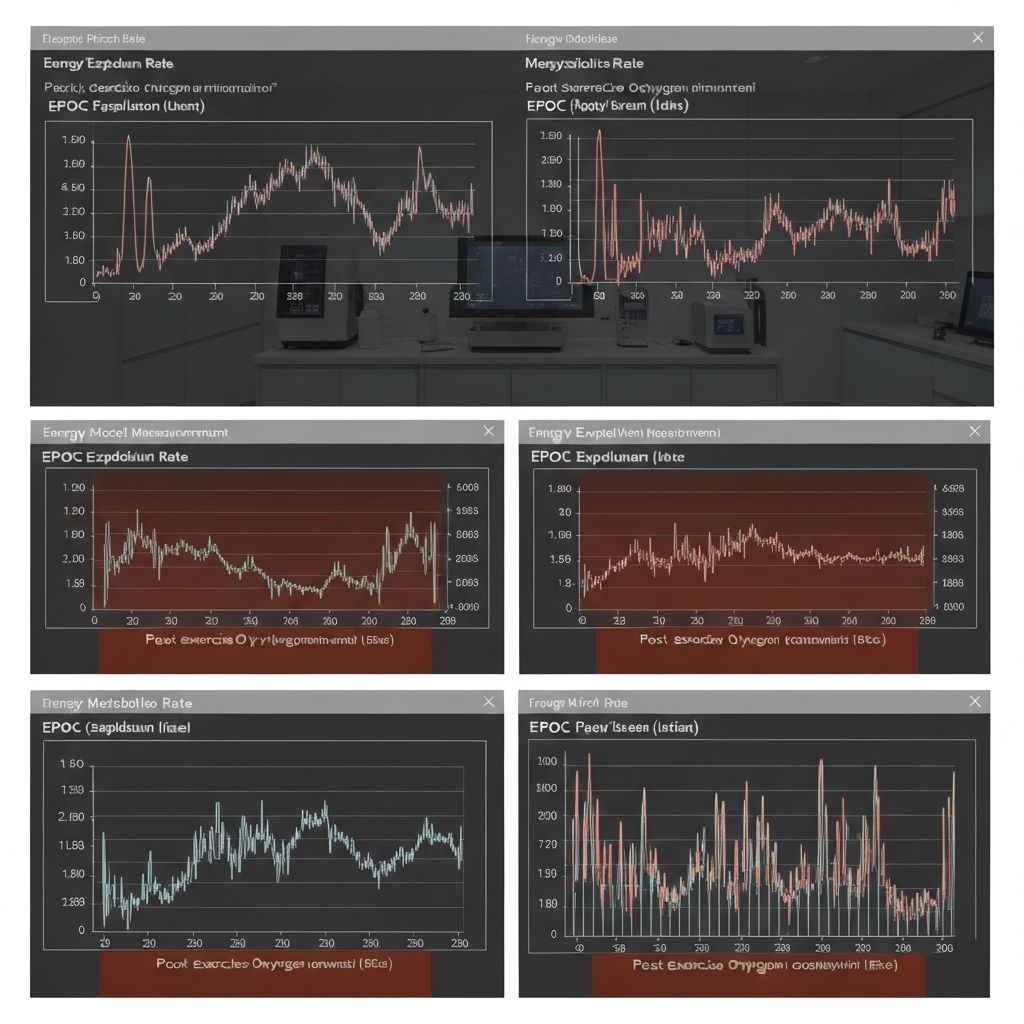
EPOC and Post-Exercise Metabolic Response
Controlled laboratory studies examining energy expenditure during and after resistance exercise have documented measurable increases in metabolic rate that extend into the recovery period. This article synthesizes research findings on acute metabolic responses to resistance training, with emphasis on excess post-exercise oxygen consumption (EPOC), substrate utilization patterns, and the magnitude and practical significance of observed effects.
Energy Expenditure During Resistance Exercise
Research measuring oxygen consumption during resistance exercise sessions typically finds that energy expenditure varies substantially depending on exercise intensity, volume, and rest interval structure. Continuous resistance exercise at high intensities produces moderate energy expenditure, while moderate intensity with longer rest periods produces lower values. The overall energy cost of a typical resistance training session (measured in kilocalories) is generally lower than the energy cost of an equivalent duration of moderate-intensity aerobic exercise. This is partly because resistance training is intermittent: elevated metabolic demand occurs during the actual lifting periods, interspersed with recovery periods involving lower metabolic rates.
Excess Post-Exercise Oxygen Consumption
EPOC refers to elevated metabolic rate measured in the recovery period following exercise cessation. Laboratory studies using indirect calorimetry (measurement of oxygen consumption and carbon dioxide production) have consistently documented the presence of EPOC after resistance exercise. The magnitude varies substantially across studies, typically ranging from minimal to moderate increases in metabolic rate lasting from a few minutes to several hours post-exercise. Factors influencing EPOC magnitude include exercise intensity, volume, rest interval structure, individual fitness level, and age.
The specific physiological mechanisms underlying EPOC include restoration of ATP-PC systems (high-energy phosphate compounds), elevation of body temperature (requiring active cooling), elevated catecholamine hormones and other hormonal perturbations, and increased heart rate and breathing. Higher intensity or greater volume resistance exercise typically produces longer EPOC duration and larger magnitude of elevation compared to lower intensity/volume sessions.
Practical Magnitude of EPOC Effect
While EPOC is a measurable phenomenon documented in laboratory research, the practical significance for total daily energy balance requires careful interpretation. Studies suggest that EPOC contributes somewhere in the range of 5-15% of the total energy cost of an exercise session, with higher percentages occurring for high-intensity sessions. In practical terms, a 30-minute resistance training session producing total energy expenditure of 150-250 kilocalories would contribute perhaps 10-40 kilocalories from EPOC, depending on intensity and individual characteristics. This is a real but modest effect that should be placed in context of total daily energy balance, which typically ranges 1500-3000+ kilocalories per day depending on body size and total activity.
Substrate Utilization in Resistance Exercise
Investigations of substrate oxidation (the relative contribution of carbohydrate versus fat oxidation) during resistance exercise using indirect calorimetry reveal that resistance sessions typically utilize both fuel sources, with the relative contribution depending on intensity, duration, rest intervals, and individual training status. Higher intensity generally favors carbohydrate oxidation, while moderate intensities show more mixed utilization. The practical significance of substrate type during acute exercise remains an area of research investigation, with evidence suggesting that the primary factor influencing energy balance is total energy expenditure rather than which fuel substrate is being oxidized.
Individual Variation and Factors Affecting Acute Response
Substantial individual variation exists in acute metabolic responses to identical resistance training protocols. Training status strongly influences response: untrained individuals may show different EPOC patterns compared to trained individuals. Age affects responses, with some research suggesting older adults may show prolonged EPOC duration. Body composition influences both the total energy cost of exercise and the magnitude of metabolic elevation. Fitness level, prior exercise experience, nutritional status, and individual genetics all contribute to heterogeneity in response.
Disclaimer: This website provides general educational information only. The content is not intended as, and should not be interpreted as, personalised exercise, training, or health advice. For personal activity decisions, consult qualified healthcare or exercise professionals.
Conclusion
Controlled laboratory research documents measurable acute metabolic responses to resistance exercise, including EPOC and substrate utilization patterns. These are real physiological phenomena. However, the practical contribution of EPOC to total daily energy balance is modest. Understanding acute metabolic mechanisms enriches knowledge about exercise physiology without providing a basis for personal activity recommendations.