Comparative Physiological Responses
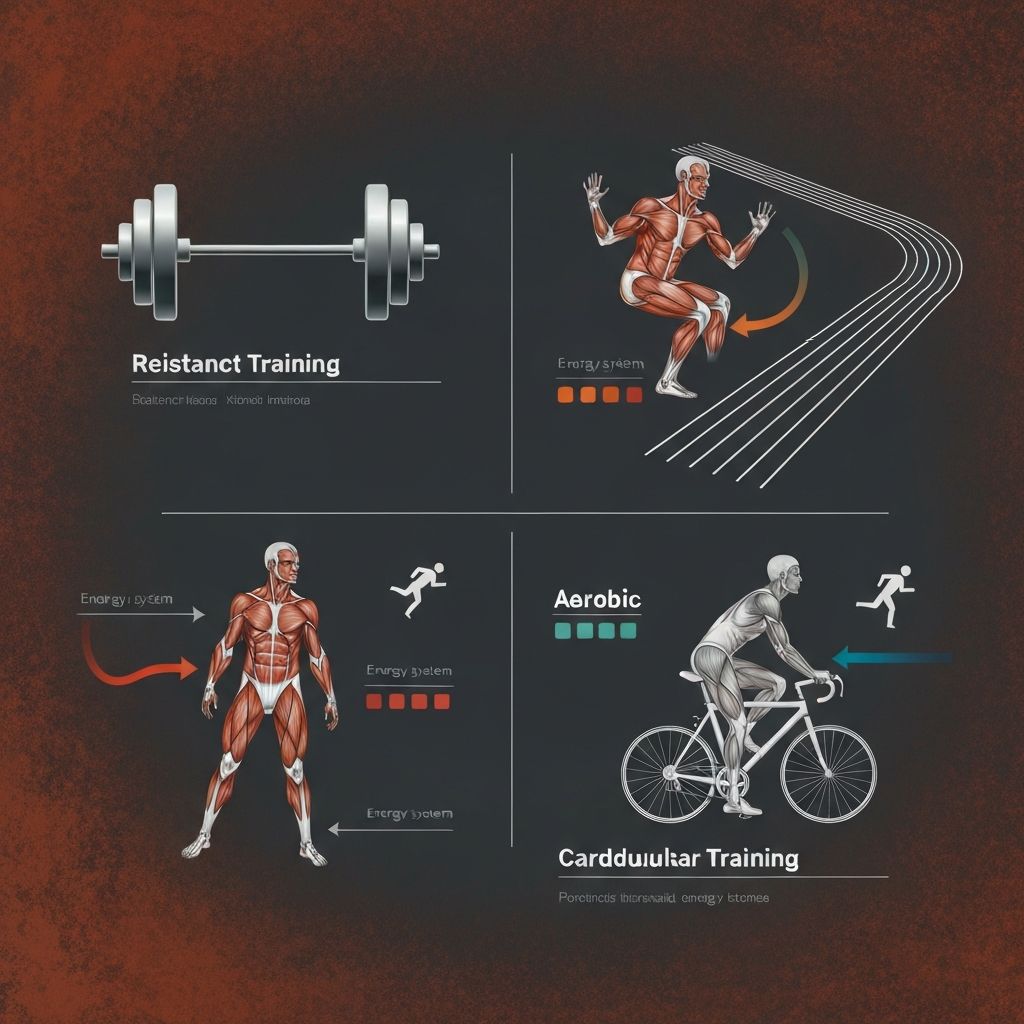
Resistance and aerobic exercise produce distinct physiological adaptations through different mechanisms and result in different energy expenditure profiles. This article synthesizes comparative research on energy costs, substrate utilization, and chronic adaptations between modalities.
Acute Energy Expenditure Profiles
Aerobic exercise performed at moderate intensity typically produces higher steady-state energy expenditure per minute compared to resistance exercise, which is intermittent by nature. However, resistance training produces longer EPOC (post-exercise elevation) compared to aerobic training. The total energy cost of a single session varies depending on intensity, duration, and individual factors, but the patterns differ substantially between modalities.
Substrate Utilization Patterns
Aerobic exercise at moderate intensity favors fat oxidation (fat burning), while higher intensity favors carbohydrate oxidation. Resistance exercise typically utilizes mixed substrates. The practical relevance of substrate type during acute exercise remains an active area of investigation, with evidence suggesting that total energy expenditure matters more than substrate type for overall energy balance.
Chronic Adaptations
Resistance training produces increases in skeletal muscle mass and strength. Aerobic training improves cardiovascular fitness and aerobic capacity with minimal lean mass change. Resistance increases resting metabolic rate through lean mass gain; aerobic training does not typically increase RMR. Both modalities improve health in different ways and contribute to total physical activity levels.
Disclaimer: This website provides general educational information only. For personal decisions, consult qualified professionals.
Conclusion
Resistance and aerobic exercise produce distinct physiological patterns. Both contribute to physical activity and health in complementary ways. The choice of modality depends on individual circumstances and goals.